
By Forrest Richardson, CSP, ARME
Director of Safety, Fit For Work
As we close out 2025, OSHA’s latest Top 10 Most Cited Violations list tells a familiar story: many of the same risks continue to show up year after year. However, the list isn’t just a snapshot of compliance gaps; it’s a roadmap for smarter prevention.
The Top 10 shows where preventable incidents are still occurring. For Safety and HR leaders, this information helps prioritize where time, training, and investment will have the greatest impact in 2026.
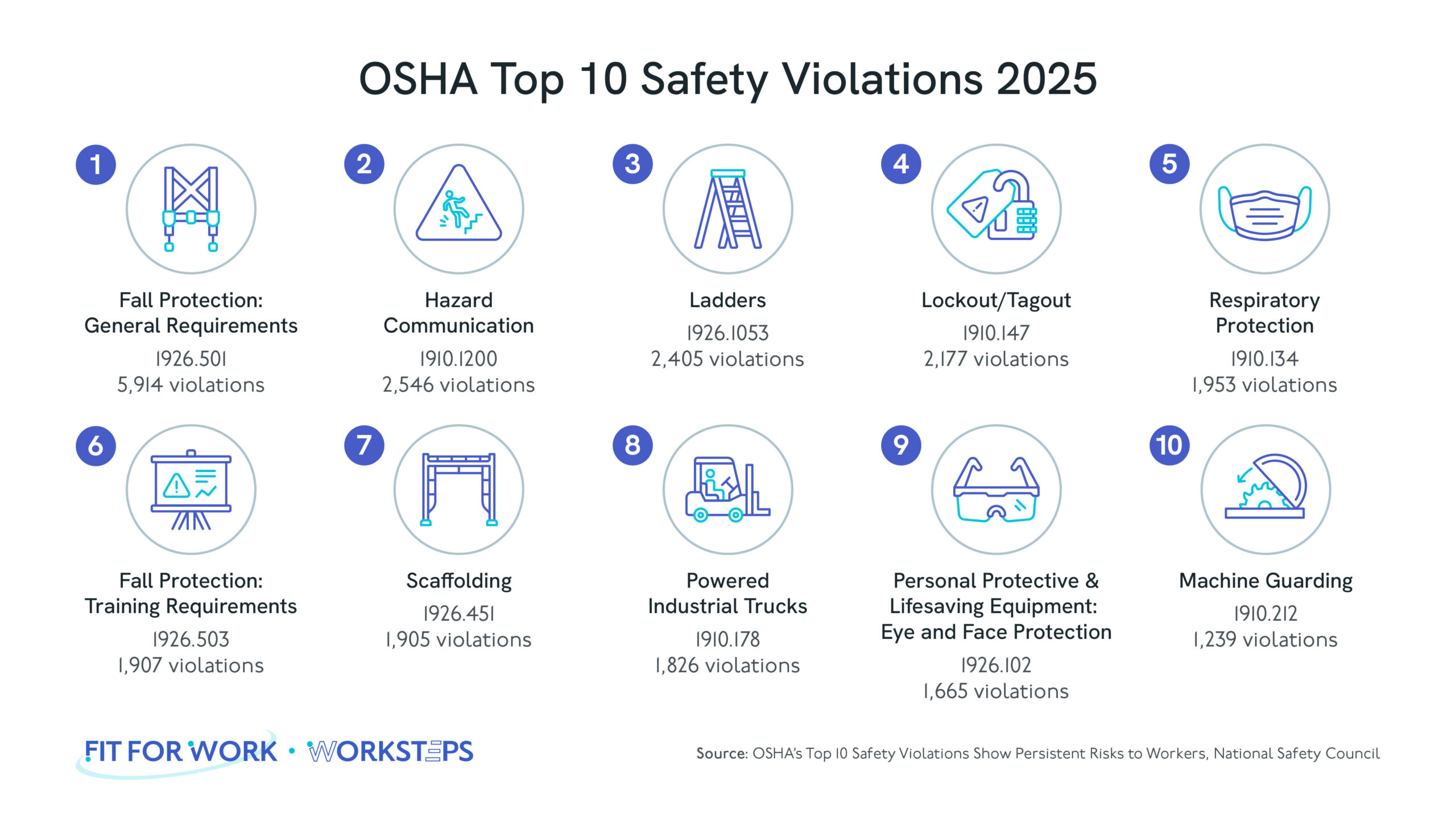
To support that work, we’ve created the OSHA Top 10 Safety Violations infographic and focus area guide to help teams get the conversation started.
Focus Areas for 2026
- Fall Protection
For the 15th year in a row, fall protection violations top the list. Beyond guardrails and harnesses, frontline coaching, inspections, and supervisor accountability are essential. - Hazard Communication / Chemical Safety
Safety Data Sheets, labeling, and chemical inventories must stay current. Program maintenance and training, especially when new chemicals or suppliers are introduced, are a major source of citations. - Lockout/Tagout & Machine Guarding
Uncontrolled hazardous energy remains a serious risk. Go beyond written procedures and verify that controls are used consistently and not bypassed under production pressure. Ensure you are in compliance with the three pillars of Lockout/Tagout: Procedures, Periodic Inspections Documentation, and Training. - Respiratory Protection & PPE / Eye Protection
Fit testing, cleaning, replacement, and enforcement matter. Eye protection violations signal the need for clear hazard mapping and consistent coaching. - Ladder & Scaffold Safety
These seem like “basics,” yet they remain frequent violations. Reinforce pre-use inspections, proper ladder selection, and competent oversight for scaffold setup. - Powered Industrial Trucks
Continuously evaluate training, inspection, certification, traffic controls, and load stability—especially when equipment or workflows change. - Predictive Safety & Culture Development
Don’t wait for violations—prevent incidents before they occur. Strengthen near-miss reporting, review leading indicators, and benchmark beyond minimum OSHA requirements.
Turning Insight into Action
2026 offers an opportunity to elevate safety from a compliance task to a strategic performance driver. Use the guide to:
- Shape training priorities
- Focus safety walk-throughs and audits
- Reinforce culture and ownership
- Start conversations about prevention—not reaction
When we use data to drive meaningful action, we not only strengthen workforce well-being—we also improve operational performance where it matters most.
Fit For Work is committed to supporting organizations in achieving and maintaining compliance with OSHA standards. Contact us to learn more.
Download the OSHA Top 10 Infographic ➡️ [Download the Infographic]
 Forrest Richardson has served as the Safety Division Director for Fit For Work for 21 years. He has over 30 years of experience in environmental health & safety (EHS) compliance management and leads national, regional, and local EHS Compliance services for Fit For Work. Forrest holds the Certified Safety Professional (CSP), Associate Risk Management Enterprise (ARME), and Certified Safety Manager (CSM) certifications. He also facilitates the Fit For Work Safety Specialist professional development track, supporting EHS podcasts, white papers, blogs, and safety newsletters.
Forrest proudly served in the United States Army 25th Infantry Division, Big Red One and 1st Calvary 227th Assault Helicopter Divisions. He is a professional member of the American Society of Safety Professionals, serving as chapter president, and supporting national professional development conferences. As a guest speaker he supports national, regional, and local professional development conferences across general, construction, and oil and gas industries.