By Ariana Emde, MS, LAT, ATC
Injury Prevention Specialist, Fit For Work
Key Insights
- Early symptom reporting reduces discomfort and injury severity.
- Athletic trainers can address both work-related and non-work-related injuries.
- Regular ergonomic observation and collaboration with safety teams help identify risks and improve workplace conditions.
- Athletic trainers help organizations shift safety culture from reactive to proactive.
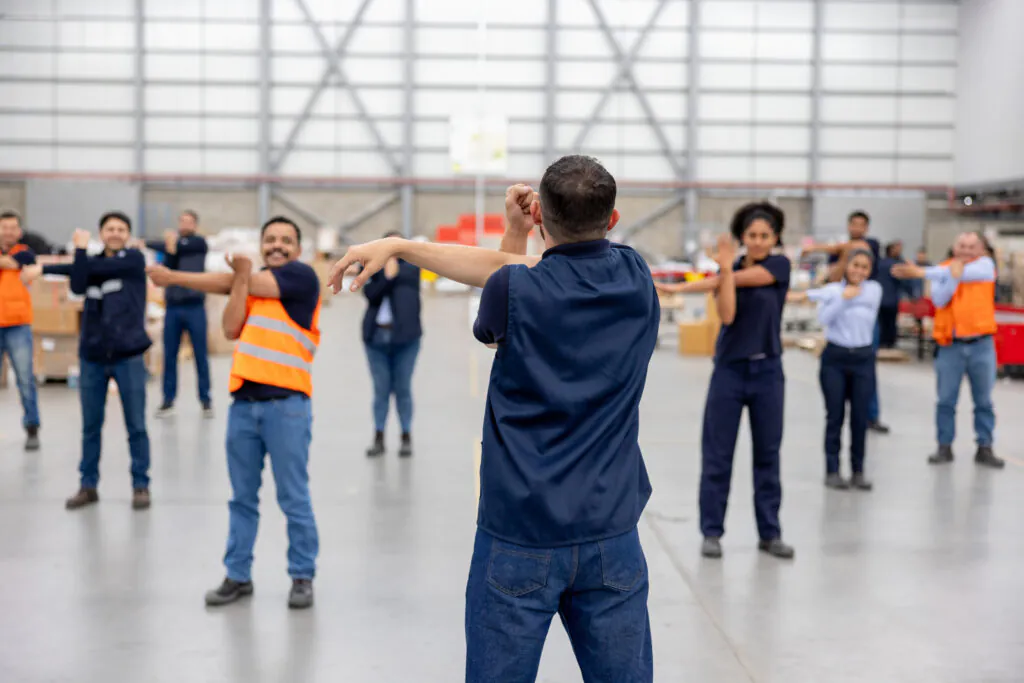
When you think of industrial athletic trainers, do pre‑shift stretching sessions come to mind? While that’s often one part of their role, onsite industrial athletic trainers also influence organizational behavior and policy on a much deeper level. Their presence supports early reporting of symptoms, improving injury management by decreasing injury severity. Strong positive relationships with athletic trainers allow employees to confidently reach out when they experience soreness, chronic pain, or acute injuries.
In many industrial settings, injury prevention specialists are credentialed athletic trainers who provide musculoskeletal and ergonomic support. At an organizational level, this role directly connects to the top five benefits of onsite industrial athletic trainers outlined below, ranging from reducing injury severity to nurturing a culture of safety and compliance.
1. Early Symptom Reporting
Early reporting is key to reducing injury severity and alleviating discomfort quickly, whether the injury is work-related or not. Addressing non-occupational soreness and chronic pain promptly with strengthening, mobility exercises, and stretching can prevent an acute injury from occurring. Symptoms directly related to workplace equipment or processes can trigger an ergonomic assessment that identifies modifications or process improvements to alleviate discomfort.
The most common symptoms reported include:
- Low- and mid-back pain from lifting, twisting, and bending
- Foot pain from long periods of standing
- Upper back, neck, and shoulder pain due to reaching and poor posture
- Hand and wrist discomfort from repetitive gripping and fine motor tasks
2. Evaluation and Treatment of Occupational and Non-Occupational Injuries
Subjective questioning—such as when the injury occurred, how it happened, the type of pain experienced, and the level of discomfort—is an effective way to gather additional information about employee injuries. Uncovering aggravating and alleviating factors provides important details that help the athletic trainer evaluate the whole picture, both at work and at home. Treatment recommendations and modifications apply to both environments and may include:
- Stretching and strengthening
- Coaching on proper lifting form
- Postural recommendations
- Job rotation
The scope of injury management and treatment varies depending on whether the injury is work-related. Work-related, OSHA-recordable injuries must adhere to OSHA first aid guidelines, which define the level and type of care that can be provided onsite. This includes treatment like massage, education on posture or form, and non-rigid wraps. Injuries that require greater intervention or non-OTC medications are overseen by a physician, with the athletic trainer stepping back to a work-focused support role.
Industrial athletic trainers have a wider scope concerning non-work-related injuries. Targeted exercise and stretching routines for home use are frequently recommended, and the athletic trainer may provide resistance bands or light weights to increase the effectiveness of exercises.
3. Ergonomic Observations and Job Coaching
Regular ergonomic observations are an opportunity for athletic trainers to observe employees performing tasks without interrupting. This allows them to identify problematic movement patterns, job processes, or equipment setup. It is also a chance to check in with employees for any feedback or questions. When areas for ergonomic improvement are observed, athletic trainers can step in with job coaching on the spot. It is important to remind employees that job coaching is not a disciplinary step; its purpose is to help them work safely. Changing the approach to that conversation often has a very positive impact.
4. Safety Coordination
The employer’s safety team is the main point of contact for industrial athletic trainers when on site. Daily check-ins communicate updates on injured employees, and weekly meetings foster coordination on ergonomic and safety concerns. Discussions range from simple things, like replacing a broken cart, to reviewing an entire process from start to finish. As solutions are developed and evaluated, those involving larger process changes need employee feedback and buy-in prior to implementation. Developing a panel of shift supervisors and key employees is an effective way to achieve both goals. As solutions are implemented, athletic trainers monitor the process and maintain multiple touchpoints to capture employee concerns and feedback.
Change, even when positive, creates uncertainty. Athletic trainers build strong relationships with employees, offering reassurance that their concerns are being addressed.
5. Culture of Safety
Industrial settings maintain a heavy focus on compliance and safety, but traditional approaches are typically accompanied by disciplinary measures, especially regarding recordable injuries that result in OSHA penalties. Athletic trainers are non-disciplinary resources and conversations are protected by Health Insurance Portability and Accountability Act of 1996 (HIPAA), so they are a safe place for employees to share concerns about processes or injuries. Even though employees may be hesitant to report small work-related injuries, athletic trainers emphasize the importance of documentation in case of future complications, so support resources are available. Shifting internal culture and building employee trust can be challenging. Frequent touchpoints and expressing genuine interest in overall well-being build rapport.
Real‑World Example: Building Trust Over Time
Changing culture and building relationships take time. At one location, an employee was resistant to engaging with the onsite athletic trainer. After a year of slowly building trust, the athletic trainer noticed the employee was limping. The employee was willing to have a conversation about the injury and receive treatment. Each situation is unique, but a patient and flexible approach can win over the most resistant employees. Respecting boundaries while remaining consistent and available is key.
A national survey conducted by the National Athletic Trainers’ Association indicated that industrial companies that employ athletic trainers saw a 25% reduction in workers’ compensation claims for musculoskeletal disorders. Half of the companies surveyed saw a decrease of 50% in work-related injuries among employees, and many also saw the severity of injuries decrease significantly.
Conclusion
Athletic trainers make significant contributions to improving organizational safety and employee wellness through ergonomic process evaluation, solution development, and early intervention. Through strong relationships with employees and the safety of confidential conversations, they can address soreness, chronic pain, and acute injuries with effective treatments, reducing injury severity. This impact on employee health and organizational behavior drives positive results at both organizational and individual levels.
For a foundational overview of the role industrial athletic trainers play in injury prevention and workforce health, see this previous article from Fit For Work.
Ready to learn more? Contact us today to discover how Fit For Work can enhance your safety program and help foster long, healthy, and productive careers for your workforce.

Ariana Emde is an Injury Prevention Specialist with Fit For Work, drawing on her training as an athletic trainer to support healthier, safer workplaces. She earned a bachelor’s degree in exercise science from Pacific University in 2016 and a master’s degree in athletic training from California Baptist University in 2020.
Born and raised on Maui, she has spent the past decade traveling across the West Coast and Colorado. Ariana lives in Oregon, where she enjoys watching football, reading, hiking, gaming, and spending time with her two dogs.