
By Jason Heinold, ATC, LAT, OSHP, and Brianna Spencer, MS, LAT, ATC, CEAS
Ergonomics, Injury Prevention, & Safety Specialists, Fit For Work
Work-related musculoskeletal disorders (WRMSDs) remain a leading cause of workplace injury, impacting productivity, employee well-being, and operational performance across industries.
In Part 1 of a two-part Q&A series on reducing WRMSD risk, Fit For Work experts, Jason Heinold and Brianna Spencer, explore practical strategies to reduce risk through education, observation, and job design. Drawing on real-world experience, they highlight how organizations can combine leadership commitment, employee engagement, and early intervention to prevent injuries before they happen and reduce severity when they do.
Understanding the Risk: Why WRMSDs Persist
Why do WRMSDs continue to be one of the most persistent and costly safety challenges for employers?
Brianna Spencer: WRMSDs remain a major challenge because they tend to develop gradually from ergonomic risk factors like repetitive motions, awkward postures, forceful exertions, and cumulative distress rather than a single incident. Early warning signs are often overlooked until the discomfort becomes a serious injury.
The costs also extend far beyond workers’ compensation claims. Indirect costs, such as lost productivity, absenteeism, turnover rates, and reduced employee morale, may be harder to identify, but they add up quickly.
Jason Heinold: In addition to these factors, it’s important to remember that we are still dealing with human behaviors, and that results in many variables when people are working. Are employees tired toward the end of their shift and ready to get home? Perhaps they haven’t been trained properly and don’t know the most ergonomically efficient methods, resulting in awkward postures. Production pressure can also play a role as employees push to meet quotas, placing less attention on how they do the work.
Looking Beyond the Workplace: Why Prevention Matters
When we talk about promoting holistic worker health, where do WRMSDs fit and why is prevention more than reducing recordables?
Jason: Holistic worker health is more than ergonomics and injury prevention on the job; it also includes what activities employees participate in outside of work. Do they have hobbies, play sports, or participate in family activities? Work-related injuries impact their life at home.
For example, a relative of mine was injured at work and despite multiple surgeries, the resulting discomfort didn’t improve. He had to go on permanent disability in his mid-40s. Over a decade later, he now has grandchildren and is unable to get on the floor to play with them. When I think of holistic worker health, I’m reminded of his experience and how much it has impacted his whole life.
Brianna: Prevention is about improving quality of life, not simply reducing injury statistics or recordable cases. Addressing early symptoms of soreness and fatigue is the best way to keep employees comfortable, productive, engaged, and healthier overall.
Prevention in Practice: What Actually Works
What does an emphasis on education, observation, and accommodation look like in a real work setting?
Brianna: Education is the training employees receive to perform their jobs. Teaching them how to recognize ergonomic risk as well as the use of proper body mechanics is key. Observation happens through regular evaluation of workstations to identify ergonomic risks. Once identified, those risks need to be eliminated or mitigated.
Accommodation can be part of that solution. For example, two employees with a significant height difference work at the same station; adjustable equipment will allow both to use the station safely and effectively.
Jason: Education can be the biggest challenge. If we don’t look at the “why” aspect, then we miss a crucial part of education. Employees need to understand the stress incorrect posture places on the body and how it fatigues them. Following ergonomic guidelines will reduce soreness and fatigue, protecting their long-term health.
What are the most effective primary prevention strategies (intervention before injury)?
Brianna: After developing good rapport with employees, I find ergonomic observations on the floor and job coaching recommendations to be the most effective prevention strategies. Building strong relationships and explaining the rationale behind recommendations are crucial.
Jason: We can’t fix something if we don’t know about it, and those observations help us identify risks before injuries happen. Toolbox talks can be a great way to share information quickly to a large group, but if there is no dialogue involved the training is often less effective. I find that small group or one-on-one trainings encourage more interaction, and employees are often willing to bring up issues they see within their area.
Brianna: During my time in a food distribution center, I did small group trainings in the aisles. As employees passed by, they would check in and I would walk through safe lifting practices with them. They would also share issues with broken equipment or potentially unsafe working situations. Connection on the floor allowed them to pass along information quickly instead of waiting until the end of a shift.
What makes training “stick” over time?
Jason: Employees need to understand the “why” and how it impacts their well-being. We also need to convey that we truly care about them. We want them to be safe and able to enjoy their time outside of work.
Peer-based learning can also be powerful. Ask them to critique each other on the six steps of safe lifting. Talking another person through the steps can really help the information sink in.
Key Takeaways for Safety Leaders
- WRMSDs often build over time, and early awareness is key to reducing severity
- Education, observation, and employee engagement drive more effective prevention
- Understanding the why behind safe movement drives lasting behavior change
- Real-time coaching is often more impactful than traditional training
- Prevention improves both safety outcomes and quality of life
In Part 2, we explore how organizations can respond early to discomfort, strengthen reporting culture, and take practical steps to reduce overall risk.
Meet the experts:

Jason Heinold is an injury prevention specialist with a strong background in athletic training and workplace health. He joined Fit For Work in June 2017 and delivers proactive injury prevention services along the East Coast. His approach combines hands-on expertise with ergonomics to help organizations reduce workplace injuries and support employee well-being.
Jason holds a bachelor’s degree in physical education with a concentration in athletic training from Eastern Illinois University. He is a certified athletic trainer (ATC), performance enhancement specialist (PES), and occupational safety and health professional (OSHP).
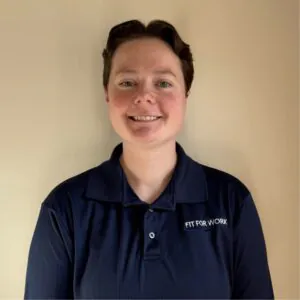 Brianna Spencer is a certified and licensed Athletic Trainer who graduated with a bachelor’s degree in athletic training from Slippery Rock University and a master’s in occupational health and safety from Columbia Southern University. At Fit For Work, Brianna develops and implements comprehensive injury prevention programs, conducts ergonomic assessments, and provides safety training tailored to the unique needs of each workplace.
Her proactive approach has significantly reduced workplace injuries and improved overall employee well-being. Specializing in injury prevention, ergonomics, and safety, Brianna leverages her expertise to promote workplace safety, health, and well-being.